2026-03-22
Comprehensive Troubleshooting Guide for Injection Molding Defects: Warping, Bubbles, Short Shots, and Sink Marks
Injection molding is one of the most widely used manufacturing processes in the world for producing plastic parts in large volumes. From high-precision automotive structural parts to intricate components used in medical and communication equipment, injection molding offers unparalleled efficiency and repeatability. However, achieving the perfect plastic part is not always a straightforward process. Even with the most advanced machinery, manufacturers often encounter cosmetic and structural defects that can compromise the quality of the final product.
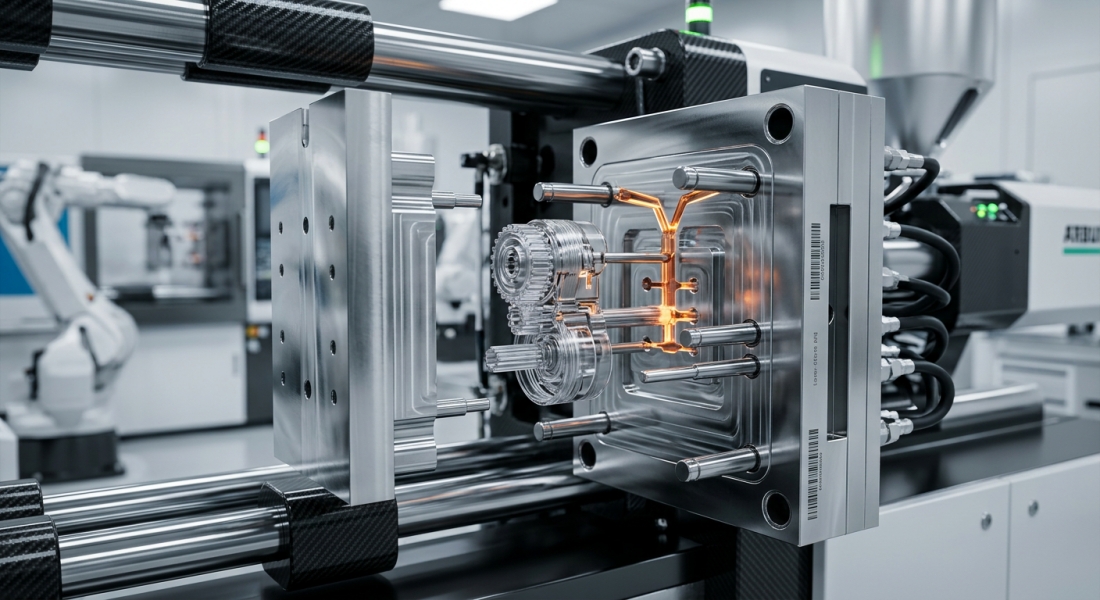
At Huawei Product Development Industrial Ltd (HWPD), we have over 30 years of experience in product design, prototyping, and mold processing. We understand that identifying the root cause of plastic injection molding defects is critical to maintaining production efficiency and product integrity. Whether you are using a prototype injection mold to verify a new design or running a mass production mold, understanding how to troubleshoot these issues is essential.
In this comprehensive guide, we will explore the most common injection molding defects. We will answer critical questions such as why injection molded parts warp, what causes bubbles and short shots, and how to effectively fix sink marks. By the end of this article, you will have a deep understanding of how to optimize your injection molding process and how partnering with an experienced manufacturer like HWPD can save you time, reduce costs, and ensure top-tier quality.
Before diving into specific defects, it is important to understand that injection molding is a highly complex process involving the delicate balance of multiple variables: temperature, pressure, material flow, and cooling rates. A slight deviation in any of these parameters can result in a defective part.
When our clients at HWPD develop new items, we often recommend starting with a prototype injection mold. This allows us to test and verify the design, the resin flowability, and the overall injection stability. By doing so, we can identify potential defects—like warping or short shots—early in the development phase, reducing the risk of costly waste during mass production.
Let’s examine the four most common defects in injection molding and how to solve them.
Warping (or warpage) is one of the most frustrating defects in the injection molding industry. It occurs when the molded part shrinks unevenly during the cooling process, causing the final product to twist, bend, or bow out of its intended shape. Instead of a perfectly flat or geometrically accurate part, you are left with a distorted component that may not fit into its final assembly.
Bubbles, also known as voids or gas pockets, are empty spaces trapped within the walls of an injection molded part. While they may sometimes only be a cosmetic issue (especially in transparent parts), they can severely weaken the structural integrity of the component.
It is important to distinguish between two types of bubbles: vacuum voids (caused by shrinkage) and gas bubbles (caused by trapped air or moisture).
A short shot occurs when the molten plastic fails to completely fill the mold cavity, resulting in an incomplete part. This defect is immediately noticeable, as portions of the product—often at the edges, thin walls, or the furthest points from the gate—will be missing.
Sink marks are shallow depressions or dimples on the surface of an injection molded part. They typically occur over thicker sections of the part, such as where ribs, bosses, or gussets intersect with the main wall. Sink marks are primarily a cosmetic defect, but they indicate underlying shrinkage issues.
Sink marks are closely related to vacuum voids. When a thick section of plastic cools, the outer surface solidifies first. As the thicker inner core cools and shrinks, it pulls the already solidified outer surface inward, creating a depression or "sink" on the visible surface of the part. If the outer skin is strong enough to resist pulling inward, a vacuum void (bubble) forms inside instead.
To help you quickly diagnose and resolve issues on the production floor, we have compiled this quick-reference troubleshooting table for injection molding defects.
| Defect Type | Visual Appearance | Primary Causes | Recommended Solutions |
|---|---|---|---|
| Warping | Part is twisted, bent, or distorted out of shape. | Uneven cooling, uneven wall thickness, low injection pressure. | Optimize cooling channels, redesign for uniform thickness, increase hold time. |
| Bubbles (Voids) | Empty spaces or trapped gas inside the part walls. | Trapped air, wet resin, uneven shrinkage in thick sections. | Improve venting, dry resin thoroughly, core out thick sections. |
| Short Shots | Incomplete part; missing edges or details. | Low pressure/speed, low temperatures, poor venting. | Increase injection speed/pressure, raise melt/mold temp, add vents. |
| Sink Marks | Dimples or depressions on the surface, usually over ribs. | Excessive shrinkage in thick areas, low holding pressure. | Make ribs 60% thickness of main wall, increase holding pressure/time. |
At Huawei Product Development Industrial Ltd (HWPD), we strongly advocate for the use of prototype injection molds for new product development.
When launching a new product, jumping straight into mass production tooling carries significant financial risk. If design flaws cause warping, short shots, or sink marks, modifying a hardened steel mass production mold is incredibly expensive and time-consuming.
Huawei Product Development Industrial Ltd is your reliable partner in product design, prototype, and mold processing. As a medium and large-scale professional mold manufacturing enterprise in China, we boast over 30 years of production experience.
Our mold building services focus on high-precision automotive structural parts and high-precision parts used in the equipment or instruments of the medical and communication industries. We produce a wide range of molds, including those for automotive interior parts (door panels, instrument panels), automotive exterior parts (bumpers, grilles), medical device housings, and parts for AI robots.
Relying on scientific and standardized enterprise management and years of technical accumulation, we have won the long-term trust of numerous customers at home and abroad. We are proud to serve well-known enterprises and world-famous automakers, including Honda, Toyota, BMW, Volvo, Mercedes-Benz, General Motors, Ford, Volkswagen, and Nissan.
Our strict QC system, including DFM meeting procedures, Design Verification & Validation procedures, and a highly efficient mold processing management system, guarantees high precision mold processing and on-time delivery.
Q1: What is the difference between a prototype injection mold and a production mold?
A: A prototype injection mold (often made of aluminum or softer steel) is built quickly and cost-effectively to test part design, material flow, and functionality for small batches. A production mold is made of hardened steel, designed for high precision, long service life, and efficient mass production of hundreds of thousands of parts.
Q2: Can injection molding defects be completely eliminated?
A: While it is nearly impossible to achieve a 100% zero-defect rate in any manufacturing process, defects can be reduced to negligible levels through proper Design for Manufacturability (DFM), mold flow analysis, precise machine calibration, and using prototype molds to test designs beforehand.
Q3: How does HWPD ensure the quality of its injection molded parts?
A: We utilize a strict QC management system. This includes comprehensive DFM analysis before mold creation, precise temperature and pressure control during the injection molding process, and rigorous post-production inspections.
Q4: What materials can be used in HWPD's prototype injection molds?
A: One of the major advantages of our prototype molds is that they can accommodate the exact same plastic materials that will be used in mass production. This includes ABS, Polycarbonate, Nylon, POM, TPU, and various blends, ensuring accurate testing and verification.
Don't let warping, bubbles, short shots, or sink marks derail your product launch. Partnering with an experienced manufacturer is the key to flawless execution.
At Huawei Product Development Industrial Ltd (HWPD), our engineering team is ready to assist you with Industrial Design, DFM analysis, Prototype Injection Molds, and full-scale Mass Production. Whether you need high-precision automotive parts or intricate medical device housings, we have the technology and expertise to deliver.
Contact Us Today to discuss your project requirements, request a quote, or learn more about how our prototype injection molding services can save you time and development costs.
Byron Wang
WhatsApp: +86-13923835403
Mobile:+86-139-2383-5403
E-mail:sales2@huaweiproduct.com
Huawei Product Development Industrial Ltd