2026-03-19
Injection molding is one of the most transformative and widely utilized manufacturing processes in the modern industrial world. From the dashboard of your car to the life-saving components in medical devices, injection molding allows for the mass production of complex, high-precision plastic parts with incredible efficiency and repeatability.
At Huawei Product Development Industrial Ltd (HWPD), we have spent over 30 years mastering the art and science of this process. As a leading manufacturer in China, we specialize in both prototype injection molds and regular plastic injection molds, serving global giants like Panasonic, Honda, Toyota, and BMW.
Whether you are launching a new consumer product, developing a high-precision automotive structural part, or engineering equipment for the medical and communication industries, understanding the nuances of the injection molding process is crucial. In this comprehensive guide, we will answer the most critical questions surrounding this technology, dive deep into material selections, explore temperature controls, and explain how prototype molds can save your project time and money.
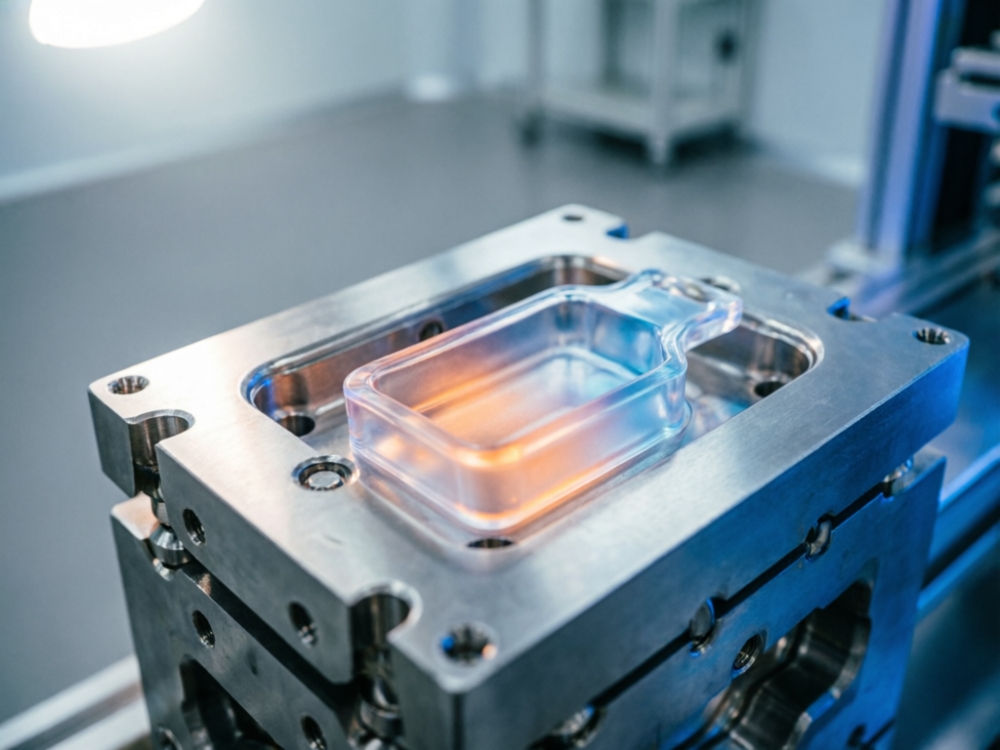
When discussing consumer products, kitchenware, packaging, or any component that will come into direct contact with consumables, the selection of food grade injection molding material is paramount. But what exactly makes a plastic "food grade"?
Food grade injection molding materials are specific polymers that have been rigorously tested and certified to ensure they do not leach harmful chemicals, toxins, or microplastics into food or beverages. In the United States, these materials must comply with the strict regulations set by the Food and Drug Administration (FDA), specifically under CFR Title 21. Similarly, in Europe, they must adhere to the European Food Safety Authority (EFSA) standards.
To be approved for food contact, an injection molding resin must possess several critical attributes:
Several plastics are universally recognized as safe for food contact and are frequently used in our injection molding facilities:
At HWPD, we ensure that our injection molding machines and molds used for food-grade products are maintained in pristine condition, preventing cross-contamination and ensuring the highest level of consumer safety.
Moving from the kitchen to the operating room, the stakes become even higher. What is medical grade injection molding? It is a highly specialized subset of the injection molding industry dedicated to producing components for medical devices, surgical instruments, diagnostic equipment, and pharmaceutical packaging.
Medical grade injection molding requires an environment, a quality control system, and a material selection process that are vastly more stringent than standard manufacturing. At HWPD, our mold building services focus heavily on high-precision parts used in the equipment and instruments of the medical industry.
Medical components cannot fail. A microscopic flaw in a surgical tool or a chemical impurity in an IV component can have life-threatening consequences. Therefore, medical grade injection molding is governed by strict international standards, most notably ISO 13485 (Quality Management Systems for Medical Devices) and ISO 10993 (Biological Evaluation of Medical Devices).
The most defining feature of medical grade injection molding materials is biocompatibility. The plastic must not cause an adverse immune response, toxicity, or irritation when it comes into contact with the human body, blood, or bodily fluids.
Medical parts must be sterilized before use. The chosen injection molding plastic must be able to withstand harsh sterilization methods without degrading, warping, or losing its mechanical properties. Common sterilization methods include:
While not all medical parts require it, many must be manufactured inside certified cleanrooms (e.g., ISO Class 7 or Class 8). These environments strictly control airborne particles, temperature, and humidity to ensure the injection molded parts are completely free of contaminants.
Through our rigorous DFM (Design for Manufacturability) procedures and Design Verification & Validation processes, HWPD guarantees the high-precision mold processing required for these critical medical components.
A common and highly technical question we receive from engineers is: What temperature is used in injection molding? The truth is, there is no single "magic number." Temperature control is arguably the most critical parameter in the entire injection molding process, and it varies wildly depending on the specific resin being used, the complexity of the mold, and the desired finish of the final part.
In injection molding, we must manage two distinct temperatures: the Melt Temperature (the heat of the liquid plastic inside the machine barrel) and the Mold Temperature (the heat of the steel or aluminum mold cavity itself).
The melt temperature is the temperature at which the solid plastic pellets transition into a flowable, molten liquid. If the temperature is too low, the resin will not flow properly (poor flowability), leading to short shots (incomplete parts) and high internal stress. If the temperature is too high, the plastic can degrade, burn, or become too liquid, causing "flash" (excess plastic leaking from the mold seams).
The mold temperature controls how quickly the molten plastic cools and solidifies once it is injected into the cavity.
To give you a clearer picture, here is a reference table showing the typical melt and mold temperatures for common injection molding plastics used at HWPD:
| Plastic Material | Abbreviation | Melt Temperature (°C) | Mold Temperature (°C) | Common Applications |
|---|---|---|---|---|
| Polypropylene | PP | 220 - 280 | 20 - 80 | Automotive interiors, packaging |
| High-Density Polyethylene | HDPE | 210 - 270 | 30 - 60 | Industrial parts, containers |
| Acrylonitrile Butadiene Styrene | ABS | 210 - 270 | 40 - 80 | Electronic housings, consumer goods |
| Polycarbonate | PC | 280 - 320 | 70 - 120 | Medical devices, clear lenses |
| Polyoxymethylene (Acetal) | POM | 190 - 230 | 80 - 105 | Precision gears, mechanical parts |
| Nylon 6/6 | PA66 | 270 - 300 | 70 - 100 | Automotive engine components |
| Polyetheretherketone | PEEK | 370 - 400 | 160 - 200 | High-end medical & aerospace |
Note: These temperatures are general guidelines. During our Prototype Injection Molding phase, HWPD engineers fine-tune these exact temperatures to test and verify the resin flowability and injection stability for your specific product design.
While injection molding is incredibly versatile, it is not a magical solution for every single polymer in existence. Engineers often ask: What plastics cannot be injection molded?
To understand this, we must divide plastics into two main categories: Thermoplastics and Thermosetting plastics (Thermosets).
Standard injection molding relies on the ability of a plastic to be melted, injected, cooled into a solid, and—crucially—melted again if needed. Thermoplastics (like ABS, PP, and PC) do exactly this.
Thermosetting plastics, however, undergo a permanent chemical cross-linking reaction when heated and formed. Once a thermoset is cured into a solid shape, it cannot be melted down again; if heated, it will simply burn or char. Examples include:
Note: While standard injection molding cannot process these, a highly modified process called Reaction Injection Molding (RIM) or specialized thermoset injection molding can be used, but it requires completely different machinery and mold designs.
PTFE is famous for its non-stick properties and incredible heat resistance. However, it cannot be processed via traditional injection molding. When heated to its melting point, PTFE does not turn into a flowable liquid; instead, it becomes a highly viscous, gel-like substance that cannot be forced through the narrow gates and runners of an injection mold. PTFE parts are typically manufactured using compression molding or paste extrusion, followed by CNC machining.
Similar to PTFE, UHMWPE has an extremely high melt viscosity. Even at high temperatures, it does not flow easily enough to fill complex injection mold cavities. It is usually processed via ram extrusion or compression molding.
By utilizing HWPD’s engineering design assistance, our clients avoid costly material selection mistakes. We guide you toward the best moldable alternatives that offer the same mechanical properties as these non-moldable plastics.
At Huawei Product Development Industrial Ltd (HWPD), we are more than just a mass-production factory. We are a full-link intelligent manufacturing solution provider. One of our core strengths is our ability to manufacture both prototype injection molds and regular mass-production molds.
For newly developed items, jumping straight into a multi-cavity, hardened steel production mold is a massive financial risk. If there is a flaw in the product design, modifying a mass-production mold is incredibly expensive and time-consuming.
To mitigate this risk, our clients frequently start by asking us to build a prototype injection mold. This allows us to test and verify multiple factors:
This crucial step helps our clients find design flaws and material selection issues early, reducing the risk of new item production and eliminating cost waste due to design problems.
We have rich experience and proprietary know-how to make high-precision prototype molds in a very short lead-time and at a low cost. The accuracy of our prototype injection molds is identical to our regular molds. Therefore, it is highly advantageous to build a prototype mold not just for testing, but to launch a small batch of new products to the market for validation.
The key advantages of HWPD’s injection molded prototypes include:
Once all problems are settled and the market responds positively, our clients simply ask us to upgrade or modify the prototype mold into the formal production mold, ensuring a seamless transition to large-scale manufacturing.
As a medium and large-scale professional mold manufacturing enterprise in China, HWPD brings over 30 years of production experience to the table. Our expertise spans across automotive parts, medical device housings, industrial precision parts, and smart device housings.
Our advanced mold manufacturing technologies cover:
Relying on scientific enterprise management and a strict QC system (including DFM meeting procedures and Design Verification & Validation), we guarantee high-precision mold processing and on-time delivery. It is this dedication to quality that has earned us the long-term trust of world-famous automakers and electronics manufacturers, including Volvo, Mercedes-Benz, Ford, Volkswagen, Nissan, Panasonic, Honda, Toyota, and BMW.
A: A prototype injection mold is typically made from softer metals like aluminum or mild steel. It is designed for speed and cost-effectiveness, ideal for producing hundreds to a few thousand parts for testing and market validation. A production mold is made from hardened steel, designed to withstand the pressures of millions of cycles for mass manufacturing.
A: Yes! At HWPD, we specialize in large part injection molding (like automotive bumpers and door panels) as well as small-sized precision injection-molded prototype parts for AI robots and medical instruments.
A: Lead times vary based on complexity. A rapid prototype injection mold can be completed in as little as 1 to 3 weeks. A complex, multi-cavity hardened steel production mold may take 4 to 8 weeks to design, machine, and test.
A: Absolutely. We offer comprehensive Engineering Design Assistance and Industrial Design services. We conduct DFM (Design for Manufacturability) and Mold Flow Analysis before cutting any steel, ensuring your design is optimized for the injection molding process.
Navigating the complexities of injection molding, material selection, and mold design can be challenging, but you don't have to do it alone. Whether you need a rapid prototype injection mold to test a new medical device, or a high-precision mass-production mold for automotive components, Huawei Product Development Industrial Ltd (HWPD) is your reliable partner.
With over 30 years of experience, a strict QC system, and a track record of serving the world's top brands, we guarantee high-quality results, competitive pricing, and in-time delivery.
Don't let design flaws or manufacturing delays cost you your competitive advantage.
Contact HWPD Today to discuss your project with our engineering experts, request a quote, or learn more about our full-link intelligent manufacturing solutions!