2026-04-06
Custom Injection Molding is one of the most widely used manufacturing technologies for producing high-precision plastic components across automotive, medical, industrial, aerospace, and AI robotics industries. However, the success of any custom injection molding project largely depends on selecting the correct plastic material.
Choosing the wrong resin can lead to warpage, cracking, poor strength, regulatory failure, or excessive cost. Choosing the right material ensures performance stability, durability, regulatory compliance, and long-term profitability.
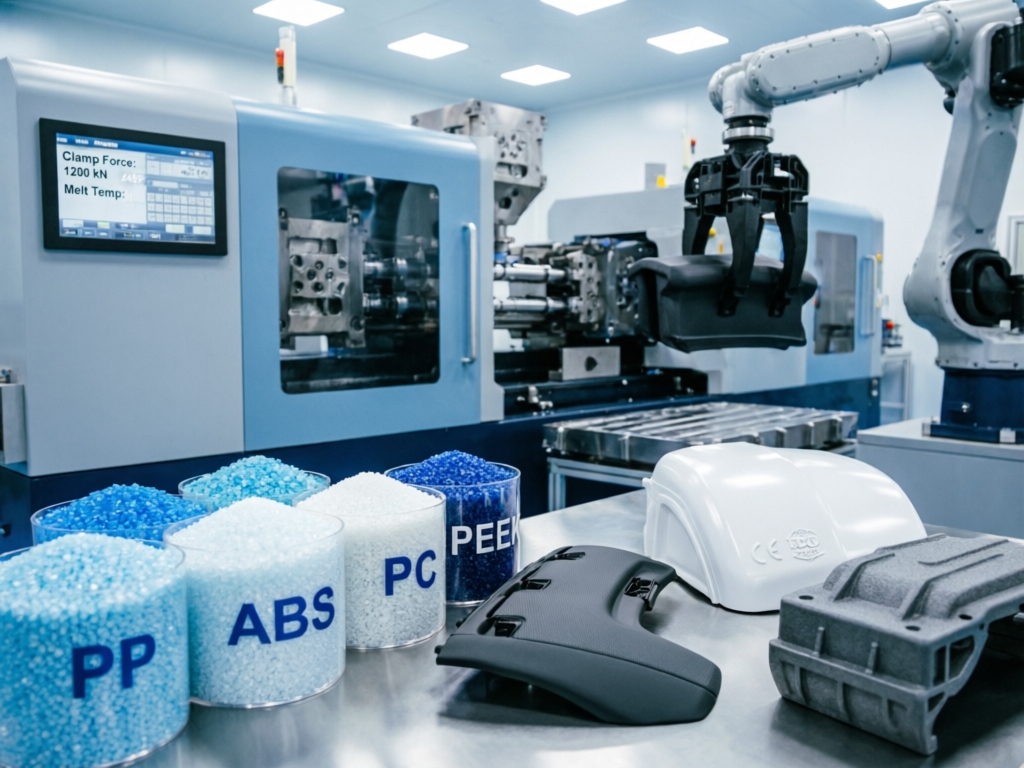
In this comprehensive guide, we will answer the most frequently asked questions about Custom Injection Molding materials, including:
Custom Injection Molding uses a wide range of thermoplastic and engineering-grade plastic materials. The choice depends on application requirements such as strength, temperature resistance, chemical resistance, flexibility, and regulatory compliance.
| Material | Key Properties | Typical Applications |
|---|---|---|
| PP (Polypropylene) | Lightweight, chemical resistance, cost-effective | Automotive interior parts, consumer products |
| ABS | Impact resistance, good surface finish | Dashboard components, electronics housings |
| PC (Polycarbonate) | High impact strength, transparency | Lighting covers, medical housings |
| PC/ABS | Strength + heat resistance | Structural automotive parts |
| PA (Nylon) | High temperature & mechanical strength | Engine components |
| PBT | Electrical insulation & dimensional stability | Connectors, automotive electronics |
| PEEK | Extreme heat & chemical resistance | Aerospace & high-end medical |
| PEI | Flame retardant, high strength | Aerospace and communication parts |
| HDPE | Chemical resistance | Containers, industrial parts |
In Custom Injection Molding, plastics can be categorized into:
Huawei Product Development Industrial Ltd specializes in high-precision automotive structural parts and medical-grade precision components, ensuring correct material selection from early design stages.
Selecting the right material in Custom Injection Molding requires a systematic engineering evaluation.
Sometimes a high-performance material like PEEK may be unnecessary if a reinforced nylon can meet the requirement at lower cost.
One of the biggest advantages of working with Huawei Product Development is the availability of prototype injection molds.
Because prototype injection molds maintain the same accuracy level as regular production molds, clients can use the exact material intended for mass production, ensuring reliable testing results.
Automotive applications are one of the most demanding areas of Custom Injection Molding. Parts must withstand vibration, temperature changes, UV exposure, and long service life.
| Application | Recommended Material | Reason |
|---|---|---|
| Interior Panels | PP | Lightweight, cost-effective |
| Dashboard Components | ABS | Good surface finish & impact resistance |
| Structural Parts | PC/ABS | Strength + heat resistance |
| Engine Parts | PA (Nylon) | High temperature resistance |
| Electrical Connectors | PBT | Electrical insulation & stability |
Huawei Product Development has over 30 years of experience manufacturing molds for door panels, instrument panels, bumpers, grilles, HVAC components, and engine peripheral parts. Our automotive clients include well-known global brands, demonstrating our expertise in high-precision automotive custom injection molding.
Medical-grade custom injection molding requires strict regulatory compliance, biocompatibility, and dimensional accuracy.
| Material | Medical Advantage |
|---|---|
| Medical Grade PC | Transparency & strength |
| PEEK | Sterilization resistance |
| Medical Grade ABS | Impact resistance |
| PP (Medical Grade) | Chemical resistance |
| PEI | Flame resistance & durability |
Huawei Product Development specializes in high-precision molds for medical equipment and communication instruments. Through strict DFM procedures and Design Verification & Validation systems, we ensure stable molding performance and consistent dimensional accuracy.
Many of our clients initially build prototype injection molds to validate new product designs before upgrading to formal production molds. This approach significantly reduces financial risk and ensures smoother large-scale manufacturing.
Polypropylene (PP) is one of the most widely used plastics due to its low cost and chemical resistance.
ABS provides better cost-efficiency and impact resistance, while PC offers higher strength and transparency.
Yes. Nylon (PA) offers excellent heat resistance and mechanical strength, making it suitable for engine components.
Medical-grade polycarbonate and PEEK are commonly used for high-performance medical applications.
Yes. Prototype molds from Huawei Product Development maintain the same accuracy as regular molds and can use the same resin materials intended for mass production.
Huawei Product Development Industrial Ltd is a reliable partner in product design, prototyping, and mold processing.
With over 30 years of experience, advanced mold processing systems, and strict QC management procedures, we help clients reduce risk, optimize material selection, and accelerate time-to-market.
If you are looking for a professional Custom Injection Molding manufacturer specializing in automotive, medical, industrial, and precision applications, Huawei Product Development is your trusted partner.
Our engineering team can assist you with:
Contact us today to discuss your project requirements and receive a professional consultation.