

Injection Molding for Automotive, Medical, Aerospace & Industrial Applications
Injection Molding is one of the most advanced and scalable plastic manufacturing technologies used across automotive, medical, aerospace, industrial equipment, and AI robotics industries. With its ability to deliver high precision, repeatability, and mass production efficiency, injection molding has become the backbone of modern plastic component manufacturing.
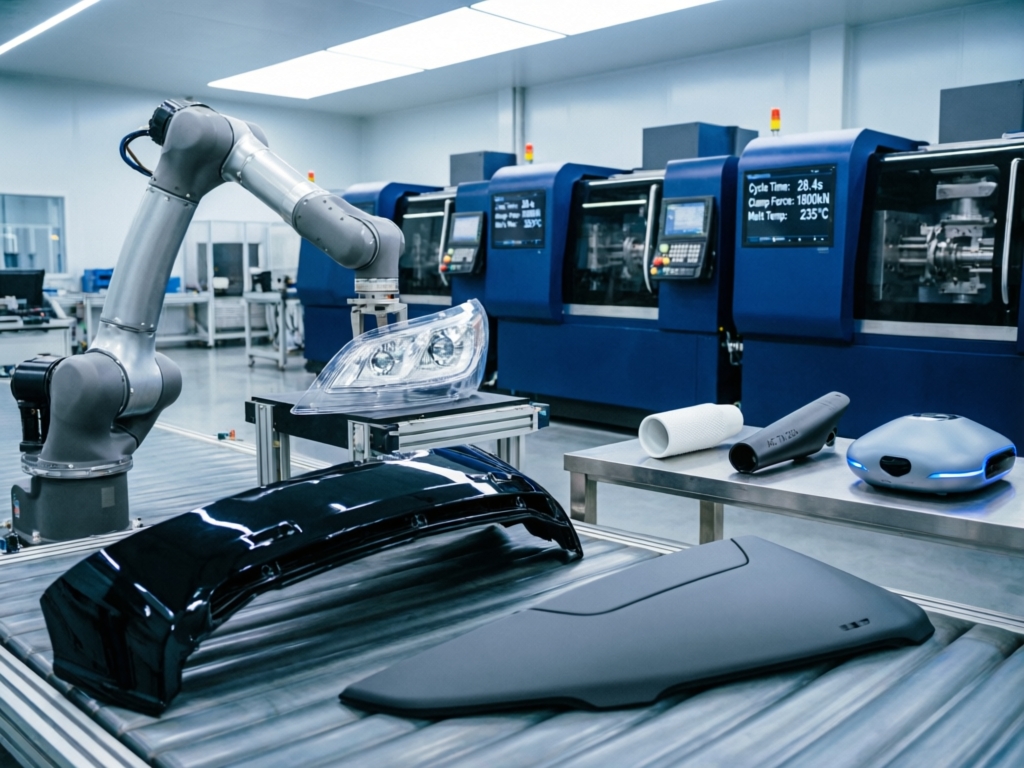
From large automotive structural parts to high-precision medical housings and AI robotic components, injection molding ensures consistent quality, cost efficiency, and engineering reliability.
In this comprehensive guide, we will explore:
- Automotive injection molding process
- Medical injection molding standards
- Aerospace injection molding requirements
- Injection molding for industrial equipment
- Injection molding for AI robotics parts
Automotive Injection Molding Process
The automotive injection molding process is one of the most demanding applications of injection molding technology. Automotive parts require high structural strength, dimensional stability, heat resistance, and long-term durability.
Automotive Injection Molding Process Overview
The process typically includes:
- Product design and DFM analysis
- Mold flow analysis
- Mold fabrication
- Trial molding and validation
- Mass production
Huawei Product Development Industrial Ltd has over 30 years of experience in automotive injection molding, manufacturing molds for:
- Door panels
- Pillars
- Instrument panels
- Glove boxes
- Bumpers
- Grilles
- Wheel arches
- Rearview mirror housings
- HVAC system components
Materials Used in Automotive Injection Molding
| Material | Application | Key Properties |
|---|---|---|
| PP (Polypropylene) | Interior panels | Lightweight, chemical resistance |
| ABS | Dashboard components | Impact resistance |
| PC/ABS | Structural housings | Strength + heat resistance |
| PA (Nylon) | Engine parts | High temperature resistance |
| PBT | Electrical parts | Dimensional stability |
Automotive Injection Molding Requirements
- Tight dimensional tolerance
- Long mold life
- High cycle efficiency
- Surface aesthetics
- Impact resistance
- Compliance with automotive OEM standards
Huawei Product Development serves world-renowned automotive brands such as BMW, Volvo, Mercedes-Benz, Ford, Volkswagen, and Nissan, demonstrating capability in high-precision large-part injection molding.
Medical Injection Molding Standards
Medical injection molding is a specialized field that requires strict quality control, biocompatibility, and regulatory compliance.
Medical Injection Molding Standards Overview
Medical injection molded parts must comply with:
- ISO quality standards
- Biocompatibility requirements
- Clean production environment standards
- Traceability systems
Medical injection molding is used for:
- Medical device housings
- Diagnostic equipment components
- Communication medical instruments
- Precision instrument parts
Key Requirements in Medical Injection Molding
| Requirement | Description |
|---|---|
| Material Certification | FDA / biocompatible plastics |
| Precision Tolerance | High dimensional accuracy |
| Clean Production | Controlled manufacturing |
| Stability | Long-term performance reliability |
| Documentation | Full traceability |
Huawei Product Development specializes in high-precision molds for medical and communication equipment, using strict DFM procedures and Design Verification & Validation systems to guarantee consistency and compliance.
Aerospace Injection Molding Requirements
Aerospace injection molding requires extremely high performance and safety standards. Plastic components used in aerospace must meet strict weight, strength, and environmental resistance criteria.
Aerospace Injection Molding Key Considerations
- Lightweight material selection
- Flame retardant plastics
- High temperature resistance
- Chemical resistance
- Dimensional stability under stress
Common Materials for Aerospace Injection Molding
| Material | Key Advantage |
|---|---|
| PEEK | High strength, heat resistance |
| PPS | Chemical resistance |
| PEI | Flame retardant |
| Glass-filled Nylon | Structural strength |
Aerospace Injection Molding Challenges
- Low defect tolerance
- Strict inspection procedures
- Certification requirements
- Advanced engineering validation
With its strong DFM meeting procedure and mold processing management system, Huawei Product Development ensures high precision mold fabrication suitable for aerospace-grade components.
Injection Molding for Industrial Equipment
Injection molding for industrial equipment focuses on durability, mechanical strength, and cost efficiency.
Applications in Industrial Equipment
- Machinery housings
- Equipment panels
- Printer and copier parts
- Precision instrument casings
- Industrial automation components
Industrial Injection Molding Advantages
| Benefit | Explanation |
|---|---|
| Cost Efficiency | Low per-unit cost at scale |
| Structural Integrity | Strong thermoplastic materials |
| Repeatability | Consistent production quality |
| Complex Geometry | Supports advanced engineering design |
Huawei Product Development provides OEM injection molding services for short, medium, and long production runs, ensuring flexibility for industrial equipment manufacturers.
Injection Molding for AI Robotics Parts
With the rise of artificial intelligence and robotics, injection molding plays a critical role in manufacturing robotic housings and structural components.
Injection Molding in AI Robotics
AI robotic components require:
- Lightweight design
- Precision fit for sensors
- Impact resistance
- High cosmetic quality
- Electrical insulation properties
Typical AI Robotics Injection Molded Parts
- Robot vacuum cleaner housings
- Smart device shells
- Sensor covers
- Structural support frames
Why Injection Molding Is Ideal for AI Robotics
| Factor | Advantage |
|---|---|
| Precision | Ensures accurate sensor placement |
| Scalability | Supports mass consumer electronics production |
| Surface Finish | Cosmetic-grade appearance |
| Integration | Supports two-color molding and IMD |
FAQ – Injection Molding for Industrial Applications
What industries use injection molding the most?
Automotive, medical, aerospace, industrial machinery, AI robotics, and consumer electronics industries heavily rely on injection molding.
Why is injection molding suitable for automotive structural parts?
Because it offers high precision, structural strength, heat resistance, and cost efficiency for mass production.
What standards apply to medical injection molding?
Medical injection molding requires compliance with ISO standards, material certification, and traceability systems.
Can injection molding meet aerospace requirements?
Yes, when using high-performance materials such as PEEK, PPS, and PEI with strict quality control processes.
What is the advantage of prototype injection molds?
Prototype injection molds allow testing and validation before mass production, reducing risk and development cost.
Start Your Injection Molding Project with a Trusted OEM Manufacturer
If you are searching for a reliable Injection Molding manufacturer for automotive, medical, aerospace, industrial equipment, or AI robotics parts, Huawei Product Development Industrial Ltd is your professional partner.
- Prototype injection molds
- Mass production molds
- Large-size automotive injection molding
- High-precision medical and communication molds
- OEM plastic injection molding services
With strict QC systems, DFM validation procedures, and over 30 years of industry experience, we help global clients reduce risk, improve efficiency, and accelerate product launch.
Contact our engineering team today to discuss your injection molding project.